


Concrete Mixers
What Is a Concrete Mixer?
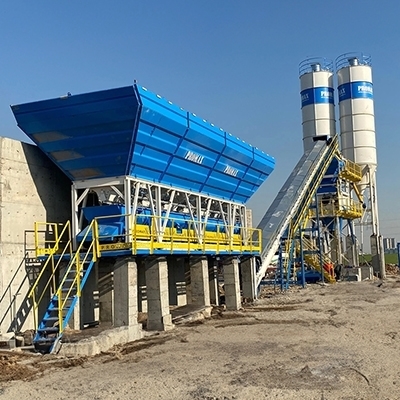
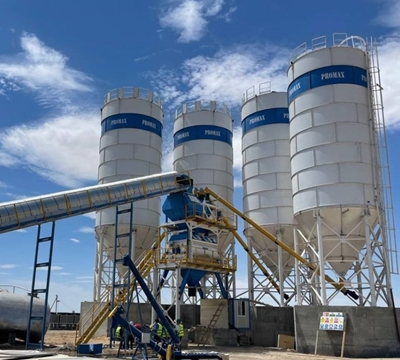
A concrete mixer combines aggregate, cement, water and admixtures according to a specified mix design to produce a homogeneous concrete mix. It is therefore one of the fundamental production components of concrete batching plants. The type of mixer used directly affects the mixing time, the volume of concrete produced per cycle, the maintenance schedule and compatibility with different mix designs. The selection process should therefore consider not only capacity, but also the properties of the concrete to be produced, aggregate characteristics and the plant’s operating schedule. Promax offers three different mixer options to meet various production requirements.
What Are the Different Types of Concrete Mixer?
Concrete mixers are classified according to their mixing mechanism and production requirements. Single-shaft, twin-shaft and planetary systems process the same raw materials but differ in terms of cycle capacity, mixing action and suitability for specific concrete mix designs. Mixer selection should therefore be evaluated together with the batching plant in which it will be installed and the intended production schedule.
Single-Shaft Mixers
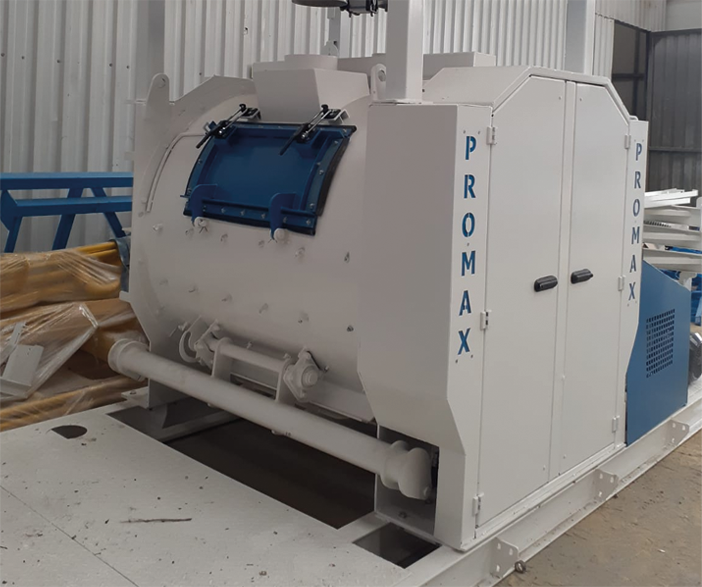
In single-shaft mixers, the mixing arms operate on a single horizontally mounted shaft. This configuration enables concrete to be prepared quickly during repetitive batch production. The easily replaceable bearing seals used in Promax Single Shaft mixers are designed to simplify maintenance. Automatic central lubrication, a water distributor, a hydraulic discharge gate and a maintenance hatch safety switch are among the features that support efficient operation. When selecting a single-shaft mixer, its loading and compacted concrete capacities must be compatible with the plant’s target cycle output.
Twin-Shaft Mixers
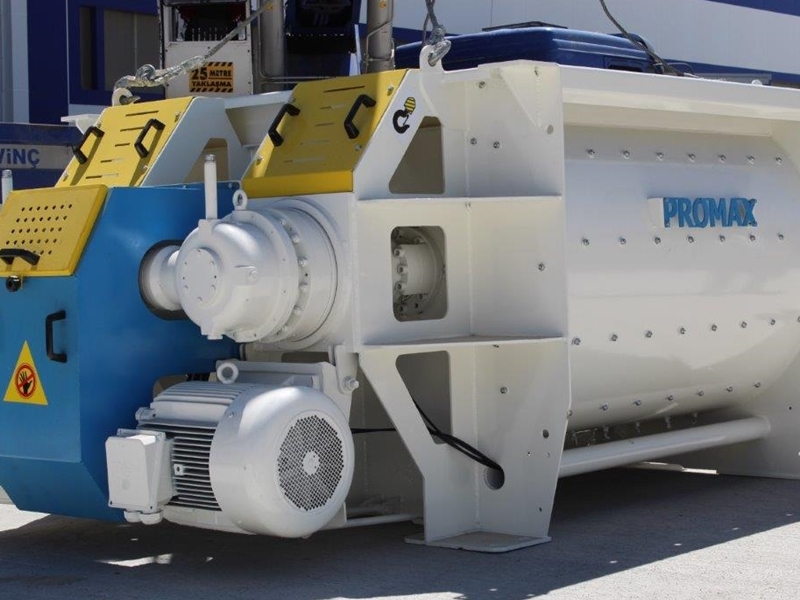
In twin-shaft mixers, two horizontally mounted shafts operate opposite one another, moving the material intensively within the mixer body to produce a homogeneous mix in a short time. These mixers can be used for ready-mixed concrete production requiring high cycle capacities, as well as for low-slump and RCC concrete mix designs. The Promax Twin Shaft series includes options with compacted concrete capacities of 2 and 3 m³. Automatic central lubrication, a hydraulic discharge gate and easily replaceable bearing seals support efficient maintenance and operation. Plant capacity, concrete mix design and the target output per cycle should be evaluated together during the selection process.
Planetary Concrete Mixers
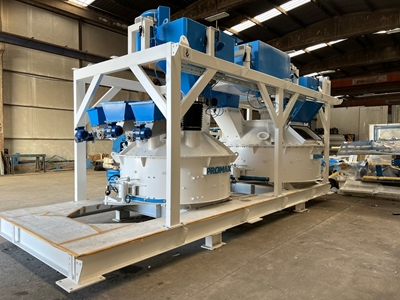
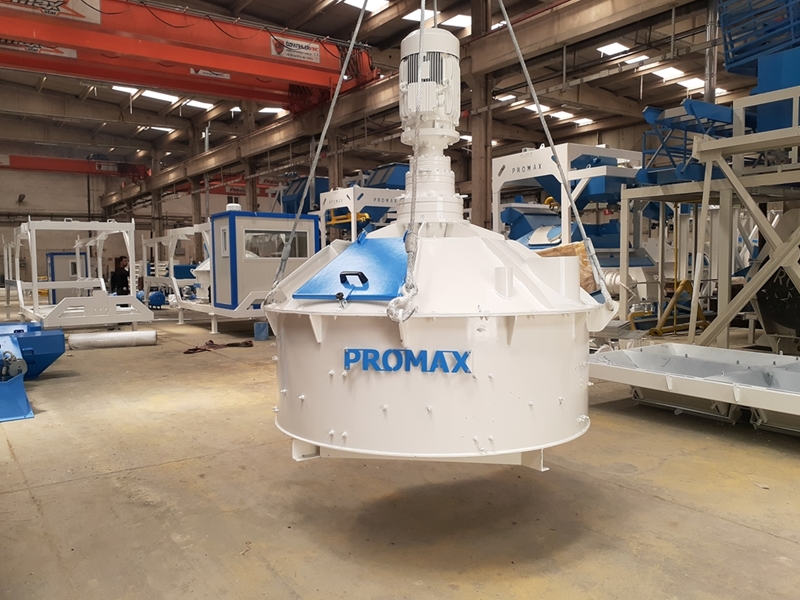
In planetary concrete mixers, the circular movement of the mixing arms distributes the material in different directions throughout the mixer volume. This configuration is preferred for rapidly producing a homogeneous mix in low-slump concrete applications. The Promax Planetary Mixer has a loading capacity of 750 litres and a compacted concrete capacity of 500 litres. The system features two mixing arms and one scraper arm, together with maintenance-free bearings, a water distributor and a hydraulic discharge gate. Wear-resistant components on the side walls and base of the mixer, together with cast mixing paddles, are designed for intensive operating conditions.
How to Select the Right Concrete Mixer
The right concrete mixer should not be selected solely on the basis of its m³ capacity. In addition to the plant’s target capacity, the consistency of the concrete to be produced, the variety of mix designs and the daily operating period should also be considered. The following factors should be assessed together during the technical comparison:
- Production capacity: When calculating the target cycle output, loading capacity and compacted concrete capacity should be evaluated separately.
- Concrete type: For ready-mixed concrete, low-slump concrete or RCC production, the mixer’s mixing mechanism must be suitable for the intended mix design.
- Aggregate characteristics: Aggregate particle size and material properties affect the selection of mixing arms and paddles.
- Maintenance conditions: Internal liners, wear parts, bearing seals, the lubrication system and spare parts availability should be evaluated together.
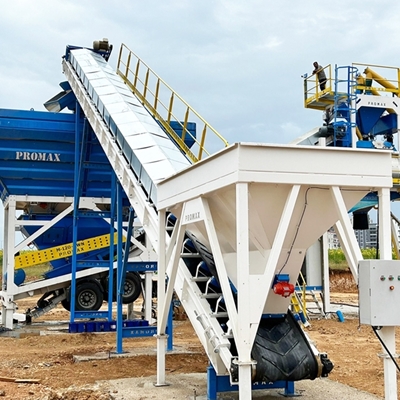
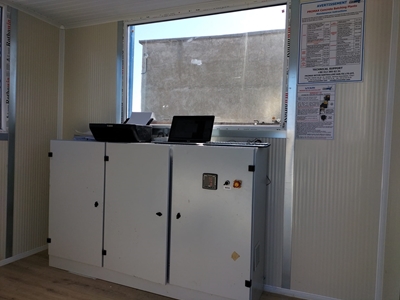
- System compatibility: The mixer must operate compatibly with the concrete batching plant’s automation, feeding and discharge systems.
Wear and Maintenance in Concrete Mixers
Concrete mixer maintenance intervals vary depending on the number of daily cycles, the abrasiveness of the aggregate used and the concrete mix design. Mixing paddles, scrapers and internal liners, which are in continuous contact with aggregate and cement, as well as discharge components, should be inspected at regular intervals. The condition of wear parts should be recorded, and a replacement plan should be prepared before mixing performance is affected. In mixers equipped with automatic central lubrication, the lubricant level and lines should be monitored regularly. The hydraulic discharge gate and safety switch should also be checked as part of the routine operating procedure. Planning spare parts requirements in advance helps minimise unnecessary downtime during maintenance.
Promax Concrete Mixer Solutions
Promax concrete mixer solutions are specified by evaluating the plant’s production capacity and the concrete mix designs to be used together. The mixer is considered part of an integrated system that operates with the automation system, material feeding arrangement and discharge point. During the quotation stage, providing details of the target m³/h capacity, daily operating period, types of concrete to be produced and site conditions helps determine whether a single-shaft, twin-shaft or planetary mixer is the most suitable option. Loading and compacted concrete capacities, motor power, wear parts and maintenance requirements are assessed specifically for each project during the technical evaluation. To determine the right concrete mixer for your project, you can contact Promax.