


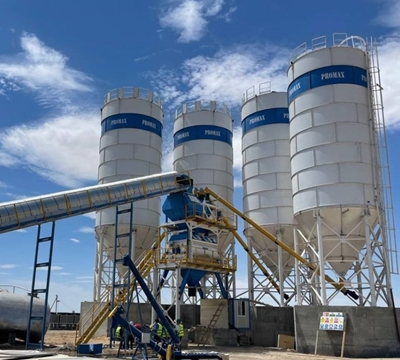
Stationary Concrete Batching Plants
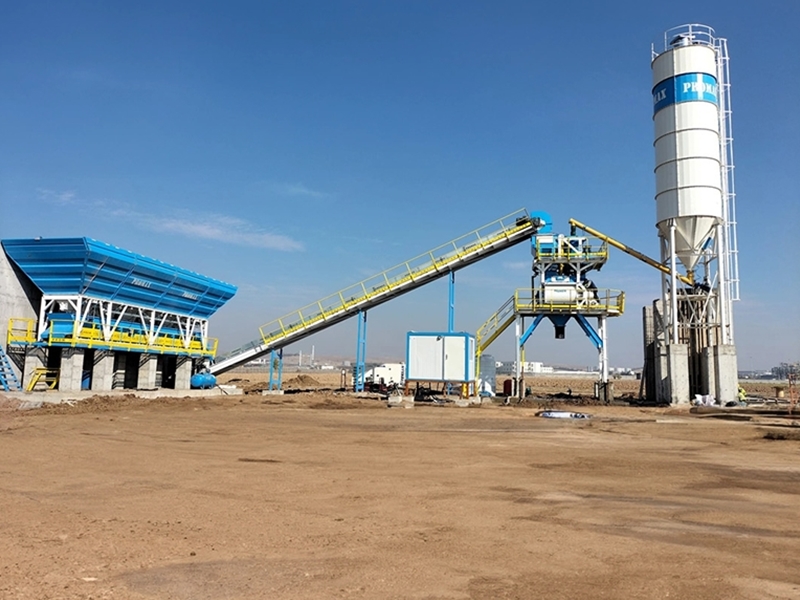
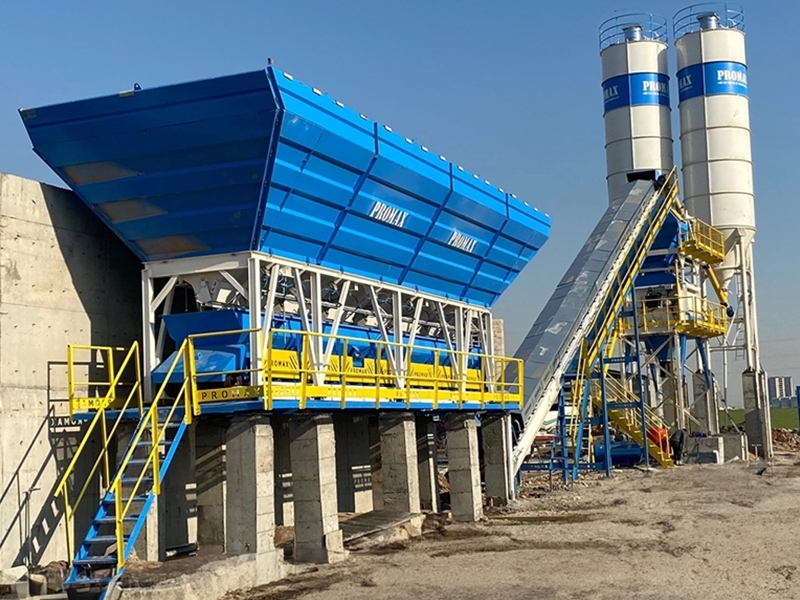
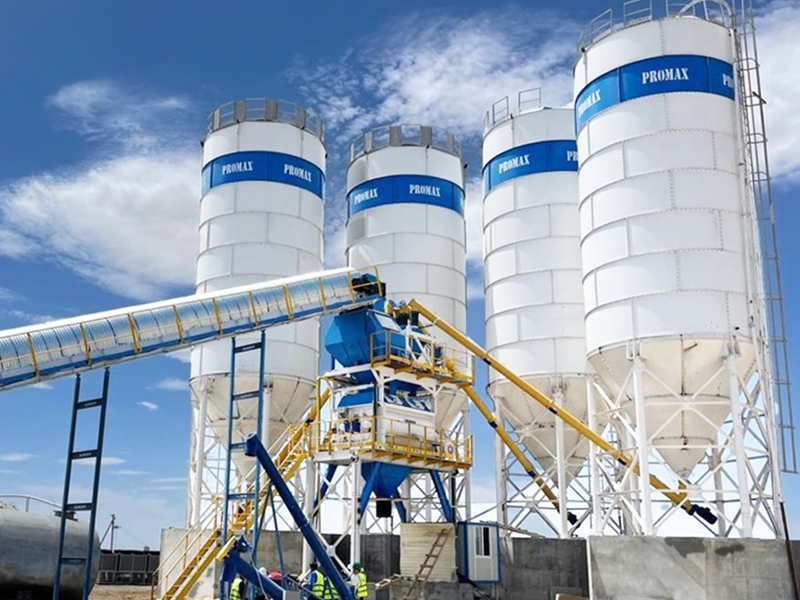
What Is a Stationary Concrete Batching Plant?
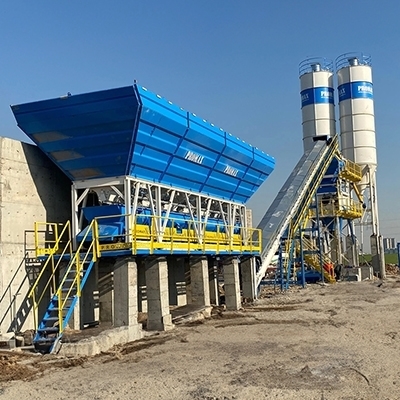
This fixed-site production system weighs aggregates, cement, water and admixtures according to a specified mix design, combines them in a mixer and supports long-term concrete production at a single site. It is particularly suitable for projects with high daily concrete demand where production must continue uninterrupted according to a defined schedule.
The primary difference from mobile plants is not limited to production capacity. Aggregate storage, the mixer, cement silos and the material conveying system can be planned on a larger scale to meet the specific requirements of the project. Therefore, plant selection should consider not only the m³/h capacity but also the concrete mix designs, site layout, operating period and daily production target.
Advantages of Stationary Concrete Batching Plants
The main advantage of stationary plants is their ability to sustain intensive production schedules at the same site over an extended period. As the plant capacity and equipment layout are planned at the beginning of the project, material flow, concrete dispatch and maintenance operations can be managed systematically.
High-Capacity Production
Any slowdown in concrete production on projects with high daily demand can directly affect other site operations. When equipped with the appropriate mixer and aggregate bin capacity, these fixed-site systems can reliably meet demanding concrete pouring schedules.
Mix Design and Dosing Control
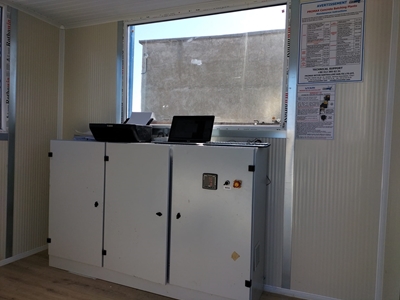
Aggregates, cement, water and admixtures are monitored through the automation system. The ability to control weighing values and production records helps ensure that the same mix design is consistently reproduced across different production batches.
Project-Specific Equipment Selection
Concrete requirements and site conditions vary from one project to another. The number of aggregate bin compartments, mixer type, cement silo capacity and material conveying system can be selected according to the aggregate types used and the planned production schedule.
Maintenance and Long-Term Operation
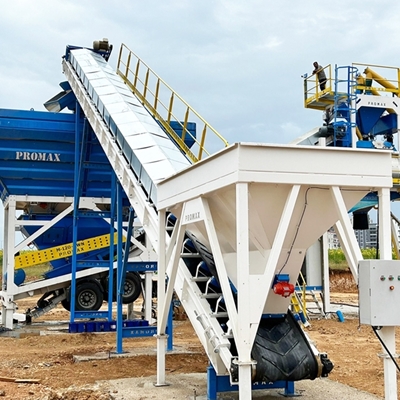
Maintenance areas and equipment access can be planned during the installation stage of a plant operating at a fixed location. With regular maintenance, the mixer, belt conveyor system, weighing equipment and pneumatic components can reliably support long-term production demands.
Which Projects Use Stationary Concrete Batching Plants?
Investing in a stationary plant becomes more practical for projects where concrete demand will continue in the same area over an extended period. High daily production volumes, the use of multiple concrete mix designs and the need for consistent dispatch operations are key factors in this decision.
- Ready-mixed concrete production facilities: Used by businesses that produce consistent volumes of concrete in different mix designs throughout the day.
- Dam and hydroelectric power plant projects: Suitable for long-term projects requiring high-volume concrete pours.
- Road, bridge and tunnel construction: Preferred for major infrastructure projects where the production schedule must proceed without interruption.
- Airport and port projects: Suitable for large-scale applications requiring concrete in different strength classes.
- Industrial facilities: Provides a consistent concrete supply for the construction of factories, power plants, warehouses and similar structures.
- Large residential and commercial developments: Supports production planning for long-term projects with intensive concrete demand at a single site.
If the project is short-term or the plant needs to be moved between different construction sites, mobile or compact models may be more suitable. The project duration, site layout and daily concrete demand should therefore be evaluated together before a decision is made.
Promax Stationary Concrete Batching Plant Models
The Promax stationary range is available in capacity options of 100, 130 and 160–200 m³/h. The models differ not only in their hourly production capacity but also in mixer volume, aggregate storage capacity and material conveying system, depending on the production target.
S100 TWN – 100 m³/h Stationary Concrete Batching Plant
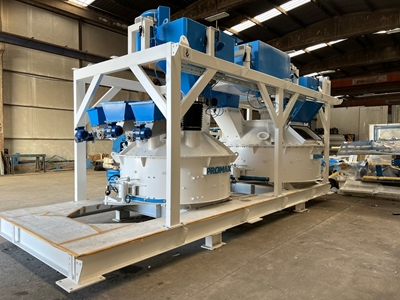
S100 TWN has a nominal production capacity of 100 m³/h. The model is equipped with a twin-shaft mixer offering a dry capacity of 3000 litres and a compacted concrete capacity of 2000 litres. Its 4 × 30 m³ aggregate bin configuration allows different aggregate types to be stored in separate compartments.
S130 TWN – 130 m³/h Stationary Concrete Batching Plant
S130 TWN has been developed for more intensive daily production schedules. With a nominal capacity of 130 m³/h, the model features a twin-shaft mixer with a dry capacity of 4500 litres and a compacted concrete capacity of 3000 litres. The aggregate bins are configured as 4 × 30 m³.
S160–S200 TWN – 160–200 m³/h Stationary Concrete Batching Plant
S160 and S200 TWN models are designed for high-volume ready-mixed concrete production and major infrastructure projects. Depending on the selected capacity, twin-shaft mixer options with dry capacities of 6000–7500 litres and compacted concrete capacities of 4000–5000 litres are available. Aggregate storage capacity can be increased to 4 × 40 m³.
Selecting the model with the highest capacity does not always deliver the best result. The actual capacity requirement should be determined by evaluating the concrete mix design, mixer cycle time, material feeding rate, dispatch schedule and daily operating hours together.
What Should Be Considered When Choosing a Stationary Concrete Batching Plant?
Plant selection should not be based solely on the capacity stated in the catalogue. How materials will be supplied to the plant, how the produced concrete will be dispatched and how many hours the facility will operate each day are just as important as its capacity.
Accurately Calculating Production Requirements
Hourly and daily concrete requirements should be determined first. A plant selected without considering peak pouring periods, the number of truck mixers and delivery distances may fail to meet site demand even if it reaches its theoretical capacity.
Aggregates and Concrete Mix Designs
The number of aggregate types used directly affects the required number of aggregate bin compartments and storage volume. The concrete grades to be produced and their mixing times form the basis of mixer selection. A plant operating with a single standard mix design has different requirements from a ready-mixed concrete facility producing various types of concrete during the same day.
Site Layout and Infrastructure Preparation
The foundation area, aggregate stockyard, vehicle routes, power connection and water supply should be planned together before the plant is installed. The positions of the cement silos and the aggregate feeding direction should also be determined by considering traffic and production flow within the site.
Maintenance, Spare Parts and Technical Support
As the plant will be operated for many years, after-sales support is just as important as the initial investment. The ability to carry out regular maintenance, obtain wear and spare parts on time and access technical support when required directly affects production continuity.
Why Choose a Promax Stationary Concrete Batching Plant?
Promax has specialised in the manufacture and engineering of concrete batching plants since 2004. For stationary plant enquiries, Promax does not simply offer a standard product based on the requested capacity. Site dimensions, aggregate types, concrete mix designs, climatic conditions and dispatch planning are also evaluated by the engineering team.
Once manufacturing is complete, transport planning, installation, operator training and commissioning are all handled as integral parts of the project. After the plant becomes operational, Promax continues to provide the required spare parts and technical support.
To date, Promax has completed more than 1,000 concrete batching plant installations across five continents and over 100 countries. You can review the company’s manufacturing and quality standards through its quality certifications and explore plants completed in different regions in the reference projects section. To compare stationary, mobile and compact systems, visit the concrete batching plant models and solutions page.
Discuss Your Stationary Concrete Plant Requirements
Share your target capacity, project location, operating schedule and site requirements with our team. We will assess the appropriate stationary plant configuration and prepare a project-specific quotation.