
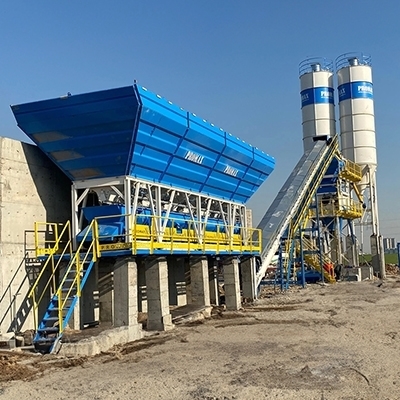


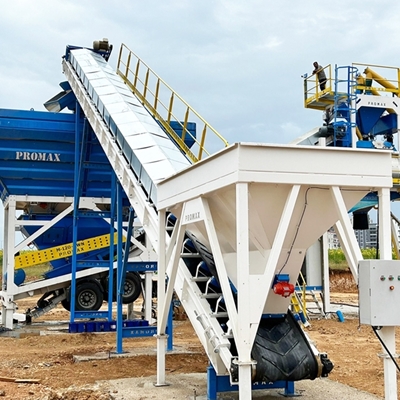
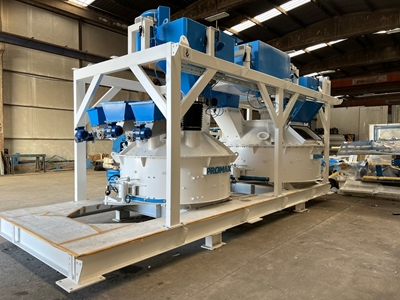
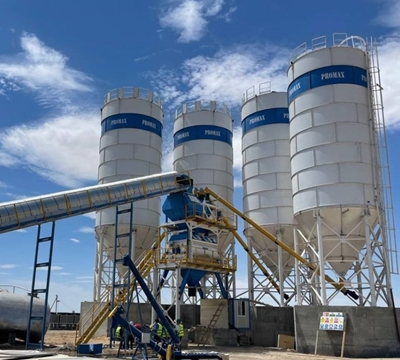
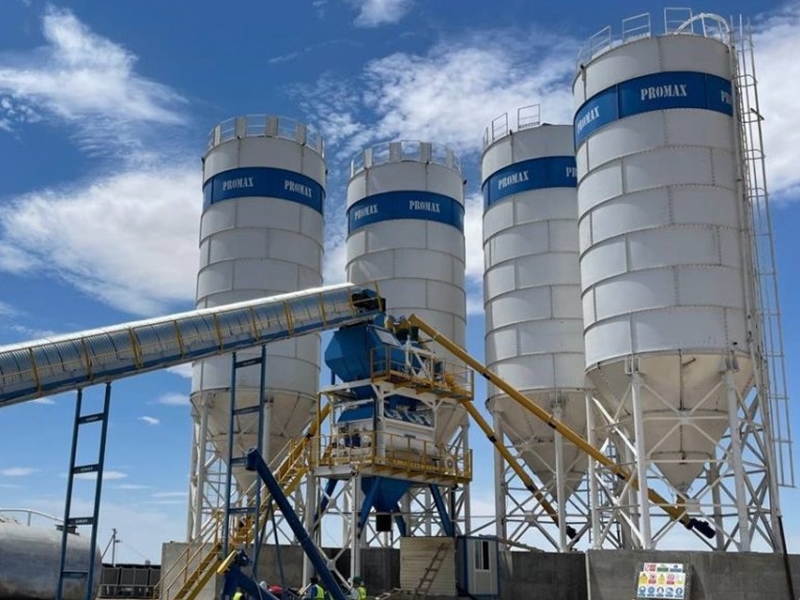
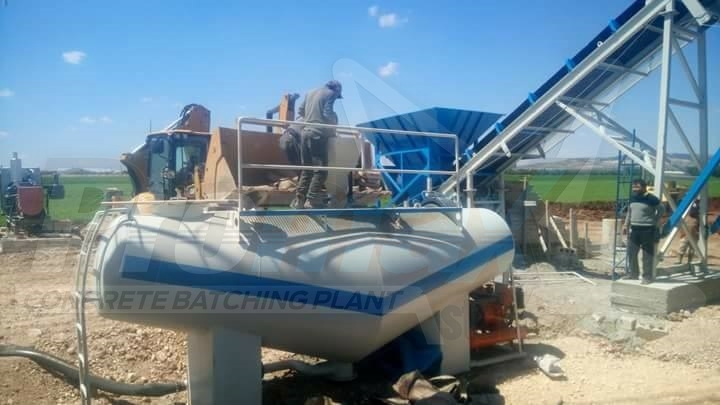
A cement silo provides suitable on-site storage for bulk cement used in ready-mixed concrete production. Once production begins, the material is fed into the weighing line in a controlled manner through the discharge equipment and screw conveyor. This ensures a consistent material flow between the cement stock and the production line.
Cement Silos And Drive Systems
The process that begins when cement arrives on site extends beyond storage. The controlled transfer of the material to the required point is also an integral part of the process. Therefore, when selecting a system, it is necessary to consider not only the silo capacity but also whether the cement will be delivered to the site in bags or in bulk. Site layout, transport conditions and the feeding method also directly influence the selection. Promax’s product range includes cement silos, transfer systems and easy loading systems.
How Does the Cement Storage and Transfer Process Work?
Depending on supply conditions, cement may arrive on site in bulk or in bags. Bulk cement passes through the filling line and is delivered directly to the silo. Bagged cement is emptied into the feeding unit of the transfer system and then pneumatically conveyed to the silo. When required for production, the stored cement is discharged in a controlled manner through the silo outlet equipment and directed to the weighing and feeding line.
To maintain an uninterrupted material flow, the silo capacity must be suitable for the cement supply method and delivery frequency. Transfer capacity, site layout and conveying distance should also be included in the planning process. When the silo and transfer equipment are properly matched, fewer deliveries are required and transfer-related delays on site are reduced.
Promax Cement Storage and Transfer Solutions
Cement Silos
Promax cement silos are manufactured in 50, 75, 100, 150, 250 and 500-tonne capacity options for the on-site storage of bulk cement. The choice between welded and bolted construction varies from project to project. Transport and installation conditions play as important a role in this decision as the required capacity. The capacities and dimensions of the models can be compared side by side in the technical table.
Cement Transfer Systems
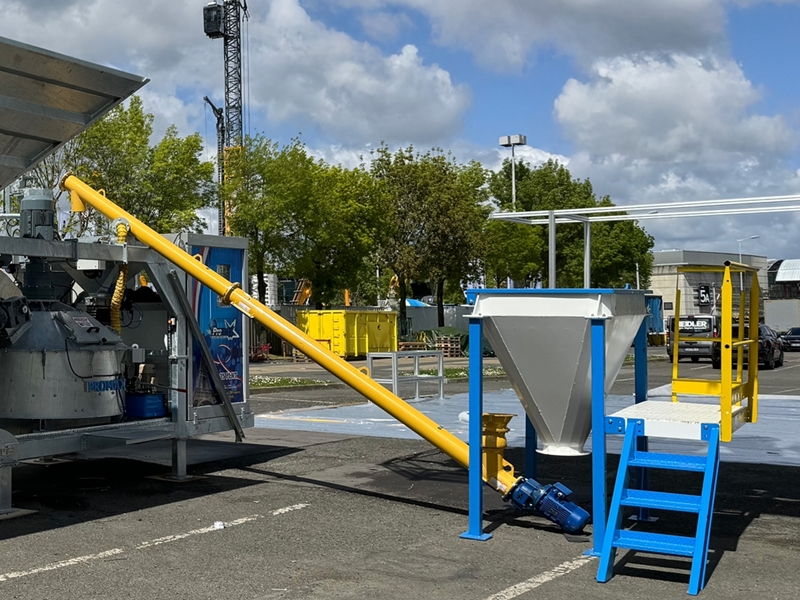
On sites where bagged cement is used, cement transfer systems convey the material to the silo. The bags are first emptied into the feeding unit. The accumulated cement is then pneumatically transferred to the silo. These systems provide an alternative solution in regions where bulk cement is unavailable or the cement plant is located far from the site.
Easy Loading System
An easy loading system is used to facilitate the delivery of material to the feeding point. The system also supports on-site loading operations. As every site has a different layout, the position and operating configuration of the system are planned individually according to the feeding method, available space and location of other equipment.
How Is the Right Cement Storage and Transfer System Selected for a Project?
The first step is to determine the plant’s daily cement consumption. The frequency of cement deliveries and the amount of stock to be stored on site are also taken into account. This information is used to establish the required silo capacity. Bulk and bagged cement each require a different transfer arrangement.
When planning the site layout, the first step is to identify an area that allows the tanker to enter and manoeuvre easily. The silo foundation, filling line and feeding distance are then positioned accordingly. The locations of the electrical and compressed-air connections are determined in advance. Transport and installation conditions also influence the choice between a welded or bolted silo. This allows the silo capacity and transfer equipment to be planned as an integrated system supporting the same material flow.
Frequently Asked Questions About Cement Silos and Transfer Systems
What is the purpose of a cement silo in concrete production?
Is silo capacity determined solely by the concrete batching plant’s production output?
No. Daily cement consumption, the interval between deliveries, the required safety stock, the number of binder types to be used and transport conditions are evaluated together. Promax offers various options ranging from 50 to 500 tonnes in capacity. The final capacity is determined according to the project requirements.
For which projects is an easy loading system suitable?
An easy loading system may be considered for projects where access to the feeding point is difficult, the available space is limited or the on-site loading process needs to be organised. The system’s position and operating configuration are planned according to the feeding method, vehicle access area and layout of other equipment.
What project information is required to prepare a quotation?
Daily cement consumption, supply method, delivery frequency, required storage duration and the number of cement types to be used should be provided. The concrete batching plant’s capacity, site layout, country of delivery, transport conditions, and availability of electricity and compressed air also help determine the most suitable system.